From zero kitchen experience
to paid F&B work.
In weeks.
The WSQ Higher Certificate in Food Services (Culinary Arts) is a nationally recognised qualification built to do one thing: get you into paid food and beverage work.
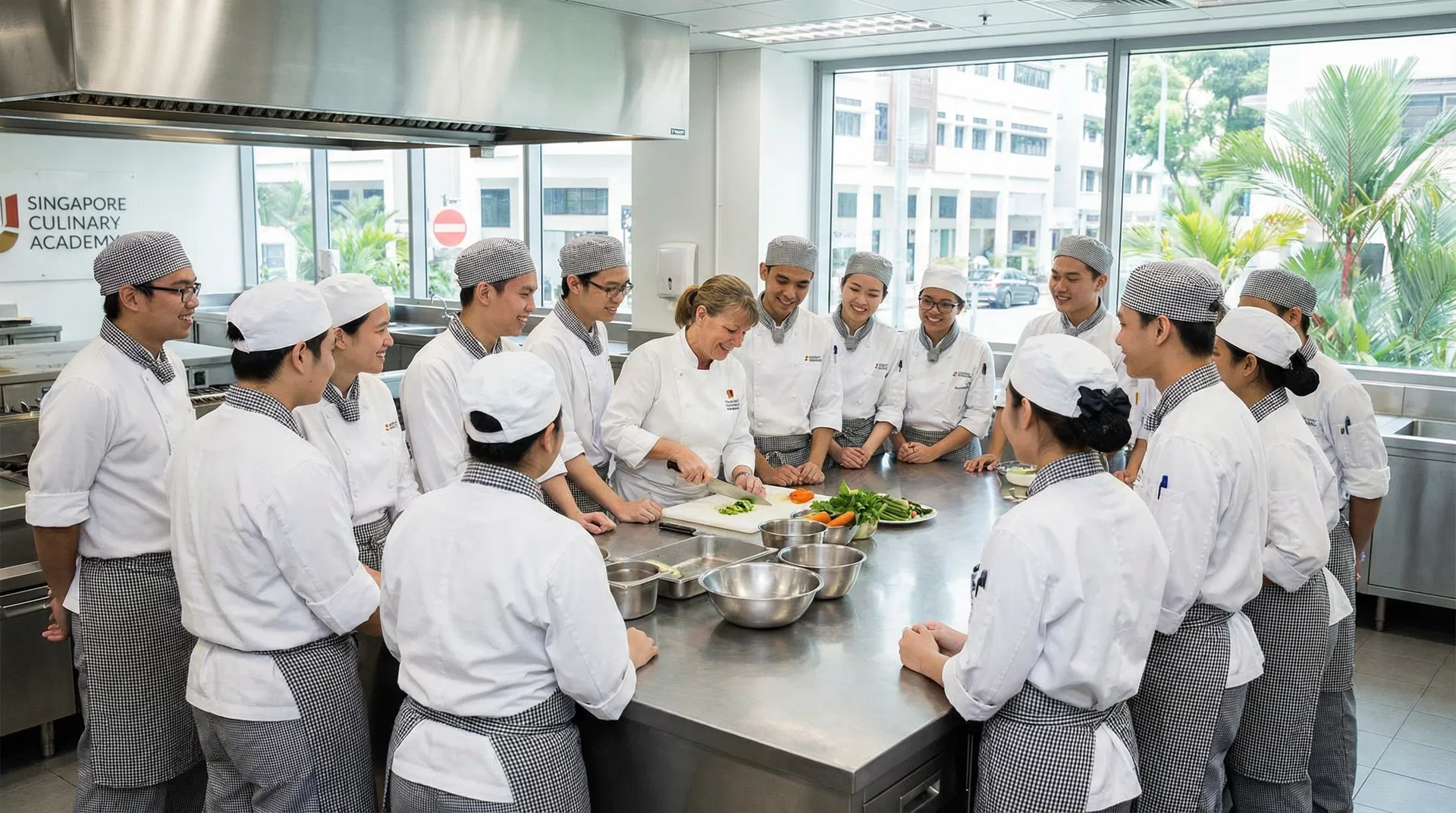
practicum
What the WSQ Higher Certificate in Food Services actually is
This is not a long academic course. It's not for people who just want to "try cooking" or learn for fun. It's for people who want to work in a kitchen, and want a fast, guaranteed path to that outcome.
The programme is run by HCSA Academy, an approved training provider, and sits under the national WSQ framework governed by SkillsFuture Singapore.
You're not signing up to study theory.
You're signing up for a direct path from training to employment.
If your goal is to enter F&B, this programme is built for that.
You start in training. You finish qualified. The next step is paid work.
Work in a professional kitchen
Not a hobby class. A direct path into a real kitchen role.
Enter F&B quickly
Short, structured programme — not a multi-year academic commitment.
Avoid long academic pathways
5 weeks full-time or 15 weeks part-time on Saturdays.
Train in a way employers value
WSQ-assessed competence that employers recognise and trust.
There are two ways people try to enter the Food & Beverage industry
The Old Way
End result
Time spent. Money spent. Outcome uncertain.
The HCSA Way
End result
Trained. Assessed. Certified. Employed.
The difference is not effort.
The difference is structure.
This programme is structured backwards from the outcome. Start with the job. Design the training around real kitchen performance. Assess competence formally. Move graduates into employment.
Exactly what happens, from start to finish
No open-ended stages. No undefined transitions. Every step is defined before you begin.
Programme Entry
Apply for the upcoming intake and confirm your training pathway (full-time or part-time). You are scheduled into a defined cohort with fixed training and assessment dates.
Practical Training
Training takes place in a modern industry kitchen under experienced professional chef trainers. Approximately 80% of your time is spent in hands-on practicum.
Formal WSQ Assessment
You undergo formal WSQ assessments that verify you can perform to recognised industry standards. This is assessed competence — not attendance-based certification.
Nationally Recognised Certification
After passing assessment, you are awarded the WSQ Higher Certificate in Food Services (Culinary Arts). At this point, you are no longer 'training'. You are qualified.
Job Placement Support
With certification completed, you move into structured job placement support. Employment follows certification — not months or years later.
Entry Into F&B Employment
You move into paid food and beverage work, either full-time or part-time. There is no 'what now?' phase. There is no gap between training and opportunity.
Why this matters
Most people do not fail because they lack effort. They fail because the path is unclear. This programme removes uncertainty by defining every stage from the moment you start to the moment you enter work. You can see the entire journey before you begin.
Practical skills employers expect you to have
Every module is designed to build practical ability that can be demonstrated, assessed, and applied directly in real food and beverage environments.
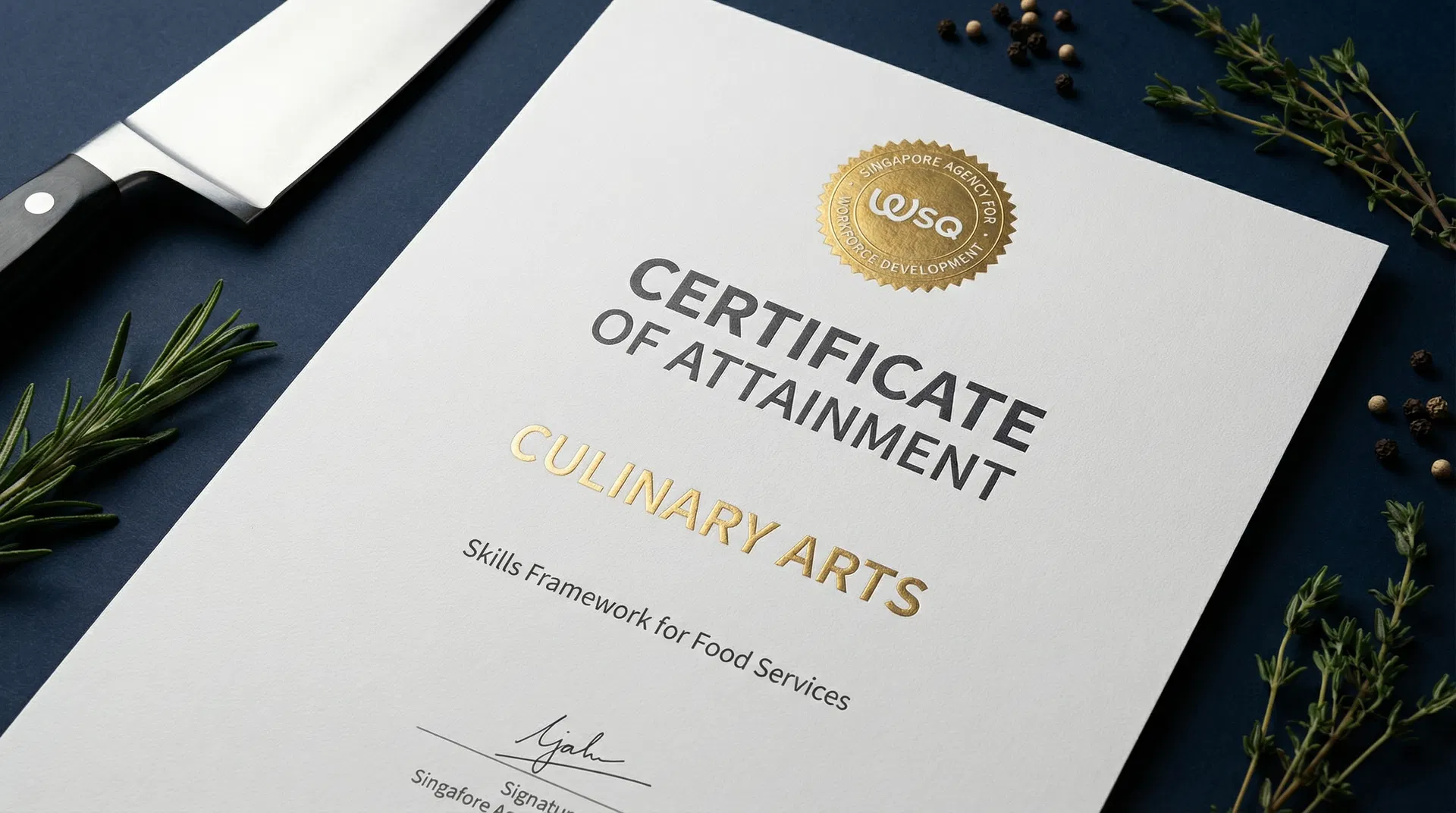
WSQ Higher Certificate in Food Services (Culinary Arts)
Nationally accredited · Recognised by employers
WSQ Food Safety Course Level 1
Safe food handling, hygiene standards, and workplace compliance required in professional kitchens.
Western Dry Heat Cooking Techniques Level 1
Fundamental techniques used in day-to-day kitchen operations.
Asian Cuisine Preparation and Cooking Level 2
Core preparation and cooking methods relevant to commercial Asian cuisine settings.
Seafood Storage and Fabrication
Proper handling, storage, and preparation of seafood to industry standards.
Meat Storage and Fabrication
Practical skills in meat handling, portioning, and preparation.
Western Dry Heat Cooking Techniques Level 2
Advanced application of dry heat techniques under assessed conditions.
Western Moist Heat Cooking Techniques Level 2
Controlled cooking methods used in volume and service-based environments.
This programme is built for one kind of person
This programme is for you if…
This includes:
This programme is not for you if…
Background, age, and previous experience are not what determine success here. Commitment to the process is.
The outcome you can expect
Graduates move into full-time or part-time food and beverage roles, depending on availability and preference.
How this is made reliable
The commitment behind this programme
"Amazing place to start your culinary journey. I would recommend trying it out."
Bryan Ong
Class of 2023
What you actually pay
The course has a full headline fee, but what you actually pay depends on your age and circumstances, because government funding is applied before payment where eligible.
Singaporean aged 21–39
incl. GST · funded course fee
+ $272.50 one-time uniform fee
Total: $2,997.50
Singaporean aged 40+
incl. GST · reduced funded fee
+ $272.50 one-time uniform fee
Total: Even lower
Programme duration
Limited upfront payment
Government funding applied before you pay. No paperwork to navigate on your own.
Complete training in weeks
5 weeks full-time or 15 weeks part-time. Not months or years.
Move into paid work
At entry-level rates, earning back ~$3,000 takes a small number of working weeks.
No hidden fees. No add-ons.
Additional credits such as SkillsFuture Credit or NTUC support may reduce this further.
Frequently asked questions
Apply for the next intake
At this point, you know what the programme is, how it works, what you learn, who it is for, what it costs, and how the path leads into work.
The only remaining step is whether you want to enter the next intake.